21 November 2026
Common mistakes that weaken a whiplash compensation case
Presented by @aftertheaccident
Understanding the whiplash claim assessment process
When you pursue compensation after a whiplash injury, the strength of your case depends on how carefully you handle each stage. A whiplash claim assessment looks at what happened, the evidence you provide, and how well you follow the legal steps. Small errors can reduce your chances of a fair outcome. Knowing what to avoid helps you protect your position from the start.
Not reporting the accident promptly
One of the most frequent mistakes is delaying the initial report. Whether the accident happened on the road or at work, you should notify the relevant party as soon as possible. A late claim notification can make insurers question the seriousness of your injury or whether it was caused by that incident at all. In Scotland, the claim deadline is three years from the date of the accident, but waiting too long risks losing evidence and witness memories. Prompt reporting also shows you took the matter seriously from the outset.
Failing to seek medical attention quickly
Whiplash symptoms sometimes take hours or days to appear. Some people brush off initial stiffness, thinking it will pass. Not seeing a doctor soon after the accident weakens your medical evidence. A GP or hospital record that notes your symptoms close to the time of the crash gives clear support that the injury was caused by the event. Without that early record, the other side may argue your symptoms are unrelated or exaggerated. Even if you feel fine, a check-up creates a baseline for your whiplash claim assessment.
Neglecting to collect evidence at the scene
Photographic evidence of the vehicles, the road conditions, and any visible damage can make a big difference. If you are able, take pictures from several angles. Also note the time, weather, and any hazards. Witness statements from people who saw what happened add weight to your version of events. Many people leave the scene without doing this, assuming the police report or insurance notes will cover everything. In reality, your own records often provide the detail that helps establish liability. Without this, the claim can become a dispute over who was at fault, which may slow the process or reduce the compensation.
Not keeping a consistent record of symptoms
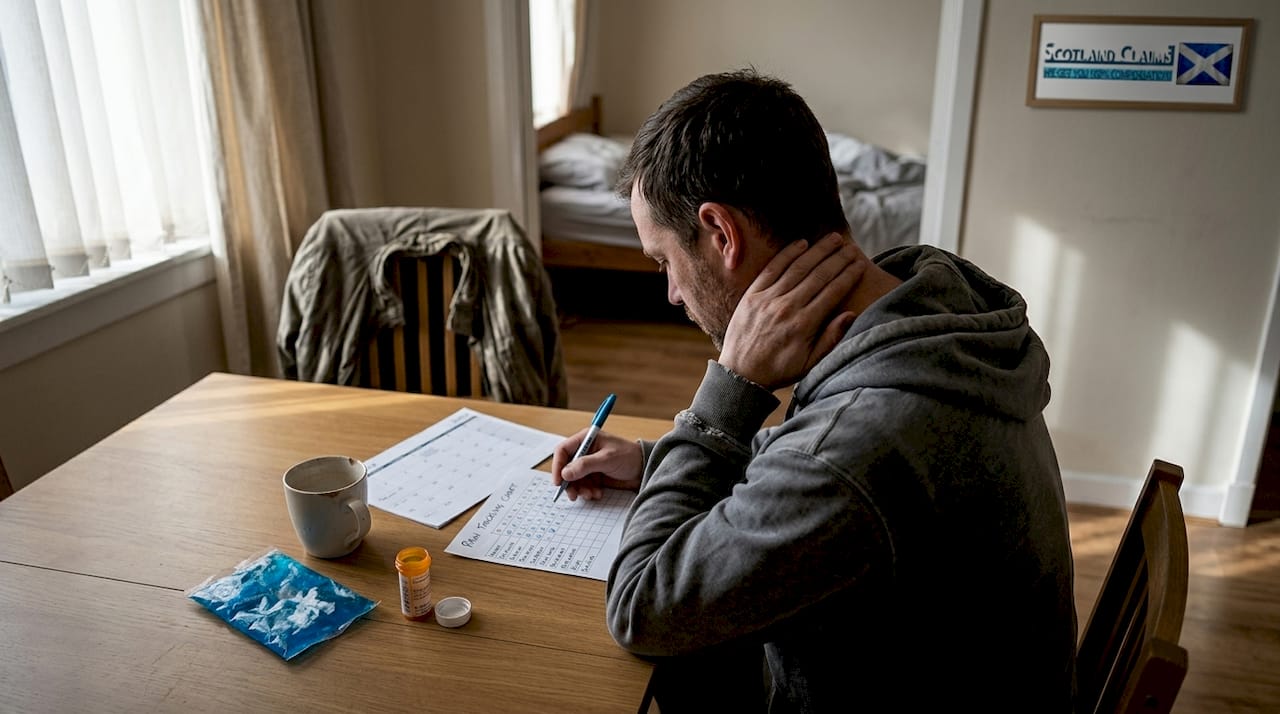
After a whiplash injury, symptoms can change over days or weeks. Headaches, neck pain, and limited movement may come and go. A diary that records how you feel each day, what activities you cannot do, and how the injury affects your sleep or work helps build a full picture. This kind of record supports your medical evidence and shows the ongoing impact of the injury. If you only mention symptoms at your solicitor consultation but have no written record, it is harder to prove the pattern. Consistency is important because insurers often look for gaps or contradictions in what claimants say.
Posting about the accident on social media
Social media posts can be used against you. Even a casual comment like "feeling better today" or a photo of you at an event can be interpreted as evidence that your injury is not serious. Insurers now routinely check public profiles. The safest approach is to avoid discussing the accident or your recovery online until the case is settled. If you do post, set your accounts to private and do not accept friend requests from people you do not know. What seems harmless can become a problem during a whiplash claim assessment.
Admitting fault or apologising at the scene
After an accident, it is natural to want to be polite. Saying "sorry" or "I did not see you" can be taken as an admission of liability, even if you were not at fault. Liability is a legal question that should be determined by the evidence, not by a comment made in the heat of the moment. The best practice is to exchange details calmly and not discuss who caused the crash. Let your solicitor and the insurers review the facts. Anything you say at the scene can appear in reports and may complicate your case later.

Delaying your solicitor consultation
Many people assume they can handle the claim alone or wait until they feel better before seeking legal advice. The earlier you talk to a solicitor, the better they can guide you on what evidence to gather and how to avoid mistakes. A solicitor can also explain the claim deadline and ensure you do not miss it. Waiting too long may mean you lose the chance to collect key evidence or speak to witnesses while their memory is fresh. A solicitor consultation is a chance to get professional advice on the strength of your case and the steps you should take. If you need support with an injury claim, speaking to someone experienced early on can prevent problems later.
Not following medical advice
If your doctor recommends physiotherapy, rest, or specific exercises, following that advice matters. Ignoring medical recommendations can be used to argue that you are not taking your recovery seriously or that your symptoms are not as bad as you claim. It can also slow your recovery, which may lengthen the claim process. Keep all appointment records and follow-up notes. If you have a good reason for not following a treatment, discuss it with your solicitor so they can prepare an explanation.
Choosing the wrong legal help
Not all solicitors specialise in personal injury or whiplash claims. A general practitioner may not know the specific rules and procedures that apply in Scotland. When you look for legal support, check that the solicitor has experience with whiplash claim assessment and understands the local courts and time limits. The right solicitor will also be clear about their fees and whether they offer a no win no fee arrangement. If you need support with an injury claim, finding a solicitor who focuses on this area gives you a better chance of a smooth process.
Ignoring the impact on daily life
Whiplash can affect more than your neck. It may stop you from working, exercising, or caring for your family. These effects form part of your claim for compensation. If you do not mention them, you may not receive an amount that reflects the real impact. Keep a record of any lost earnings, travel costs for appointments, and help you need from others. The more detail you provide, the more accurate your claim can be.

A whiplash claim assessment relies on clear evidence and careful timing. Avoiding these common mistakes puts you in a stronger position to reach a fair result. Taking the right steps from the start saves time and reduces stress.